Students Showcase Bold Projects at 2026 SEAS Senior Design Expo
From brain-computer interfaces and smart footballs to open-source lithography platforms and AI-powered hand-hygiene systems, Electrical Engineering seniors brought real-world problem-solving to life through nine ambitious capstone projects.
From a clip-on device that turns handwritten notes into searchable digital text to a low-cost ultrasonic depth-sounding system for underwater applications, Columbia Electrical Engineering students showcased a wide range of hands-on innovations at this year’s EE & ME Senior Design Expo.
The annual Columbia Engineering Senior Design Expo brought together student teams working across embedded systems, biomedical engineering, machine learning, signal processing, hardware design, and human-centered technology. Many of the projects began with a practical question: How can electrical engineering make existing tools more accessible, efficient, measurable, or intelligent?
“It is fulfilling to see students’ hard work and creativity culminate at the Senior Design Expo,” said Richard Lee, Laboratory Manager at Electrical Engineering Department. “It’s a great chance for students to showcase their individual strengths while collaborating.”
This year’s projects reflected that spirit of applied innovation, with students building systems for health care compliance, sports analytics, environmental monitoring, assistive communication, microfabrication, and more. Below are the top three from the judges:
- First Place: Hand-Hygiene Monitor for Hospitals
- Second Place: Microarchitecture Synthesis Tool
- Third Place: Noise-Canceling Headphones
Image Carousel with 16 slides
A carousel is a rotating set of images. Use the previous and next buttons to change the displayed slide
-
Slide 1: ee
-
Slide 2: ee
-
Slide 3: ee
-
Slide 4: ee
-
Slide 5: ee
-
Slide 6: ee
-
Slide 7: ee
-
Slide 8: ee
-
Slide 9: ee
-
Slide 10: ee
-
Slide 11: ee
-
Slide 12: ee
-
Slide 13: ee
-
Slide 14: ee
-
Slide 15: ee
-
Slide 16: ee
Here are nine EE projects from the 2026 Senior Design Expo:
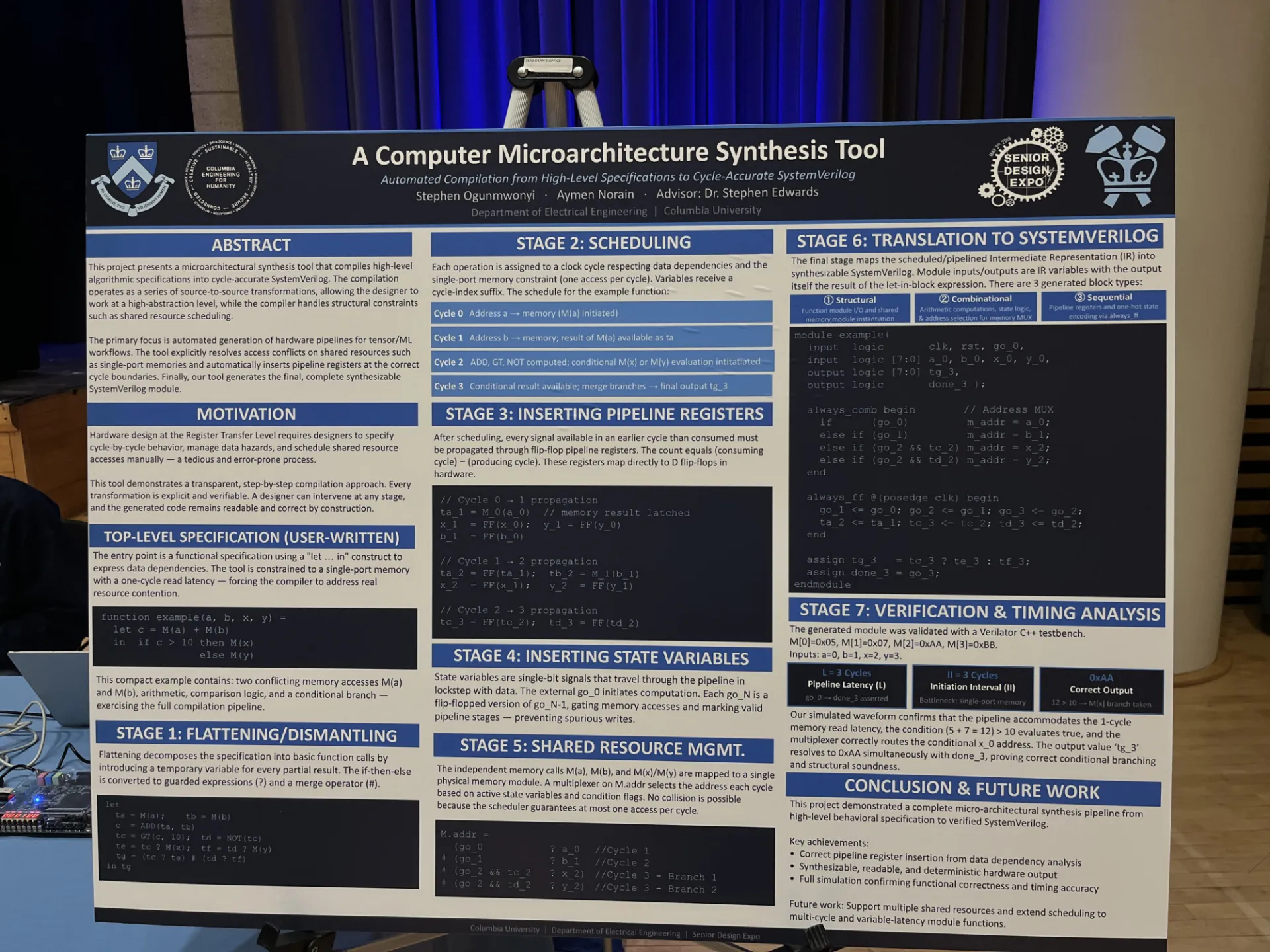
A Computer Microarchitecture Synthesis Tool
Team: Stephen Ogunmwonyi and Aymen Norain
Advisor: Prof. Stephen Edwards (Computer Science)
This project tackles one of the more complex challenges in hardware design: translating high-level algorithmic specifications into cycle-accurate SystemVerilog. The team developed a microarchitectural synthesis tool that automates the generation of hardware pipelines, helping designers move from abstract behavior to synthesizable hardware.
The tool breaks down specifications into simpler operations, schedules them across clock cycles, inserts pipeline registers, manages shared resources such as memory access, and produces readable SystemVerilog output. By making each transformation explicit and verifiable, the project offers a more transparent approach to hardware compilation, especially for tensor and machine learning workflows that rely on efficient pipelined architectures.
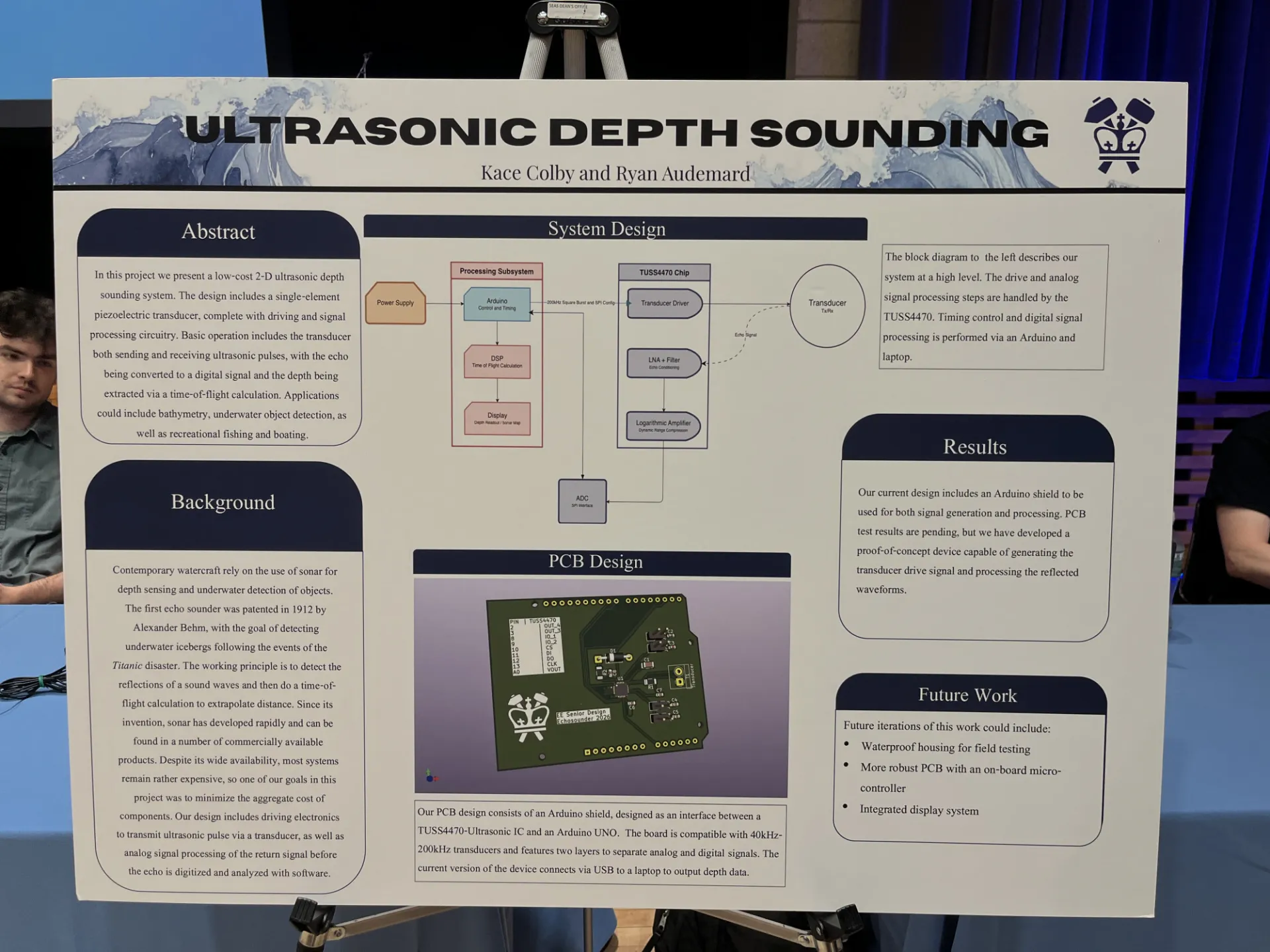
Ultrasonic Depth Sounding
Team: Kace Colby and Ryan Audemard
Advisor: Prof. David Vallancourt
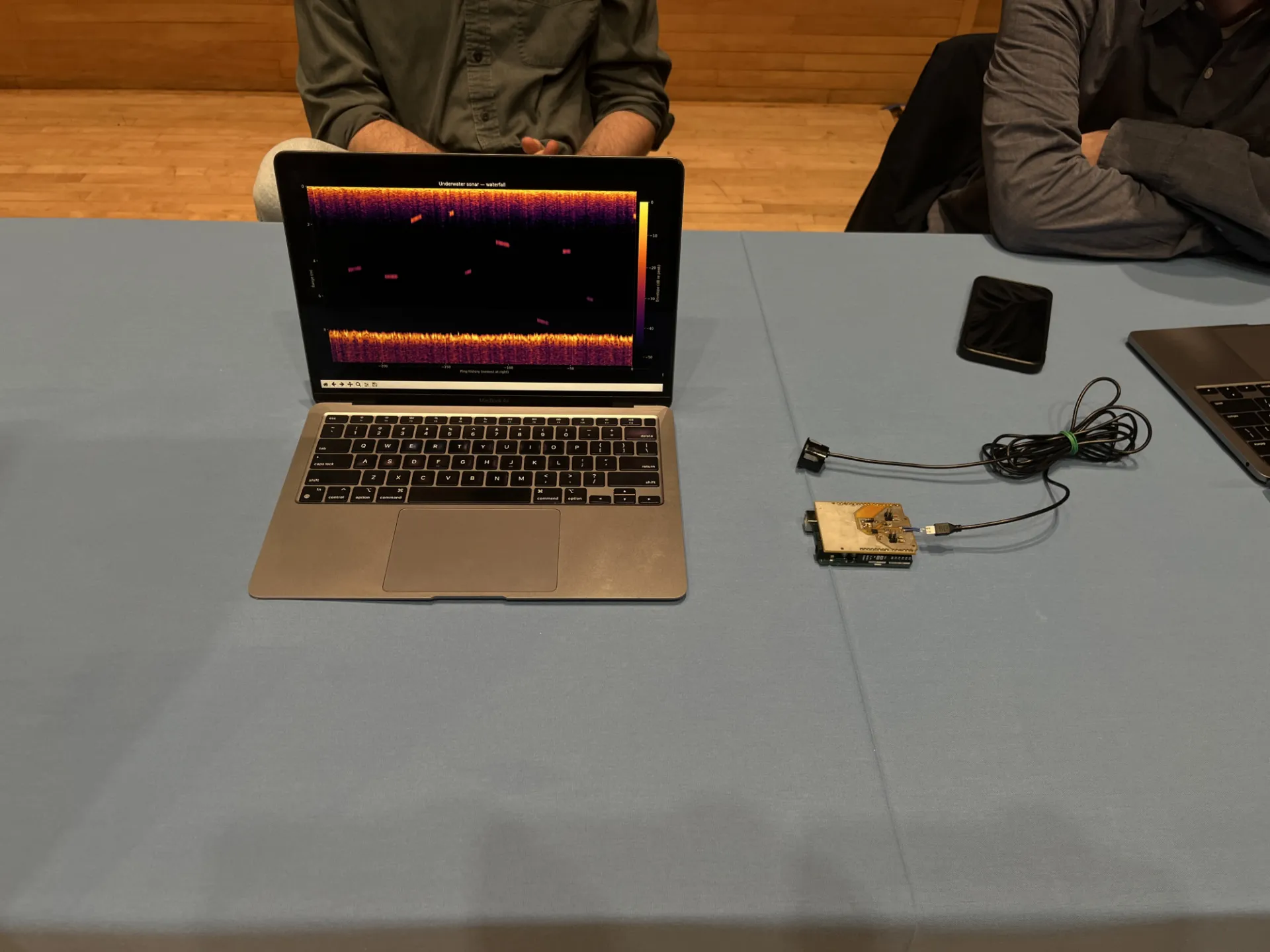
Designed as a low-cost two-dimensional ultrasonic depth sounding system, this project uses a piezoelectric transducer to send and receive ultrasonic pulses, then converts the returning echo into a digital signal to calculate depth through time-of-flight analysis.
The system combines a transducer, driving and signal-processing circuitry, an Arduino-based timing and processing setup, and a custom PCB shield. Its potential applications include bathymetry, underwater object detection, recreational fishing, and boating. By focusing on affordability and compact design, the project explores how sonar-based sensing can become more accessible beyond expensive commercial systems.
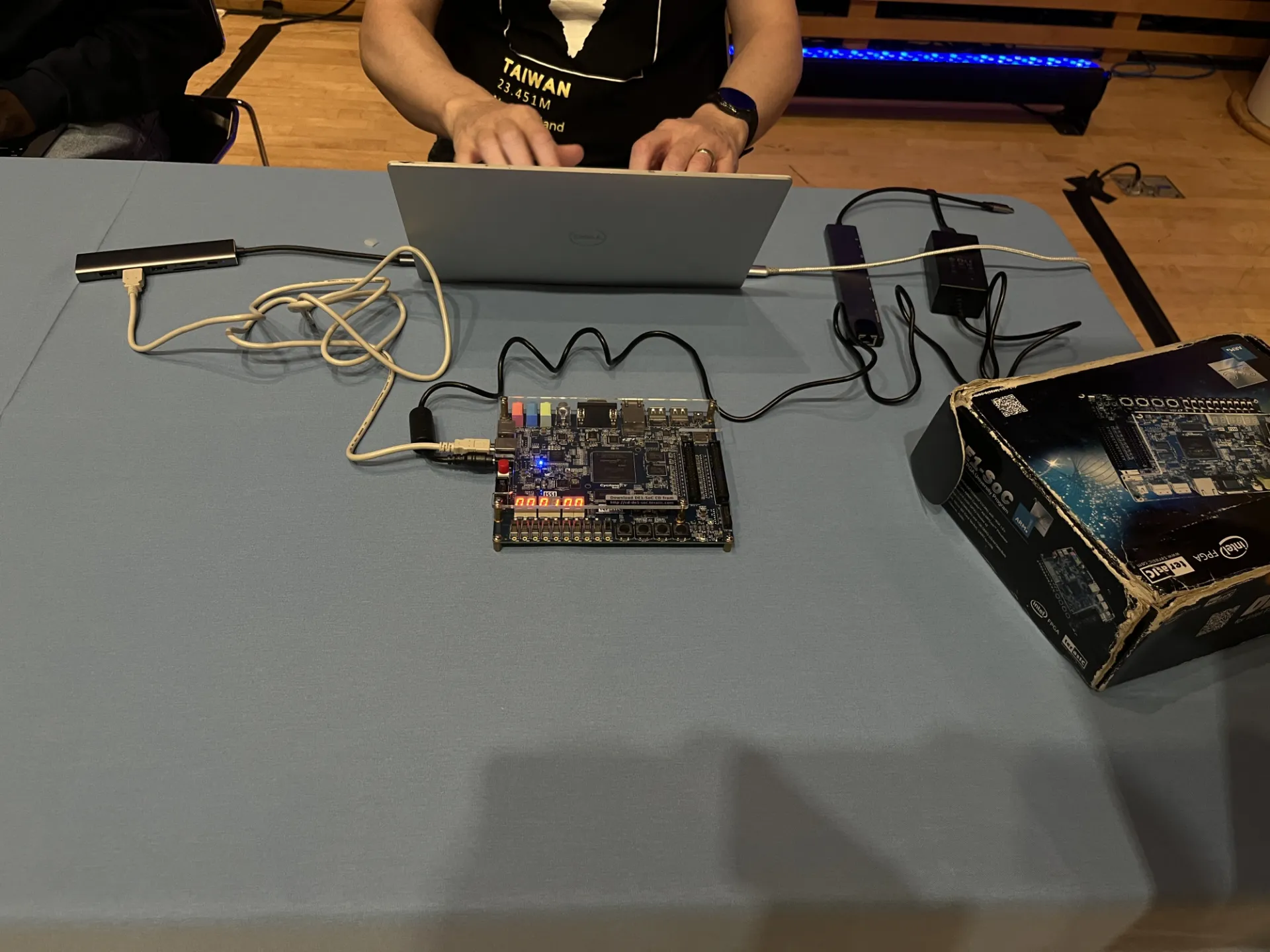
FPGA-Based Multi-Sensor System
Team: Molly Liu and Serena Yang
Advisor: Professors. David Vallancourt and Christine P. Hendon
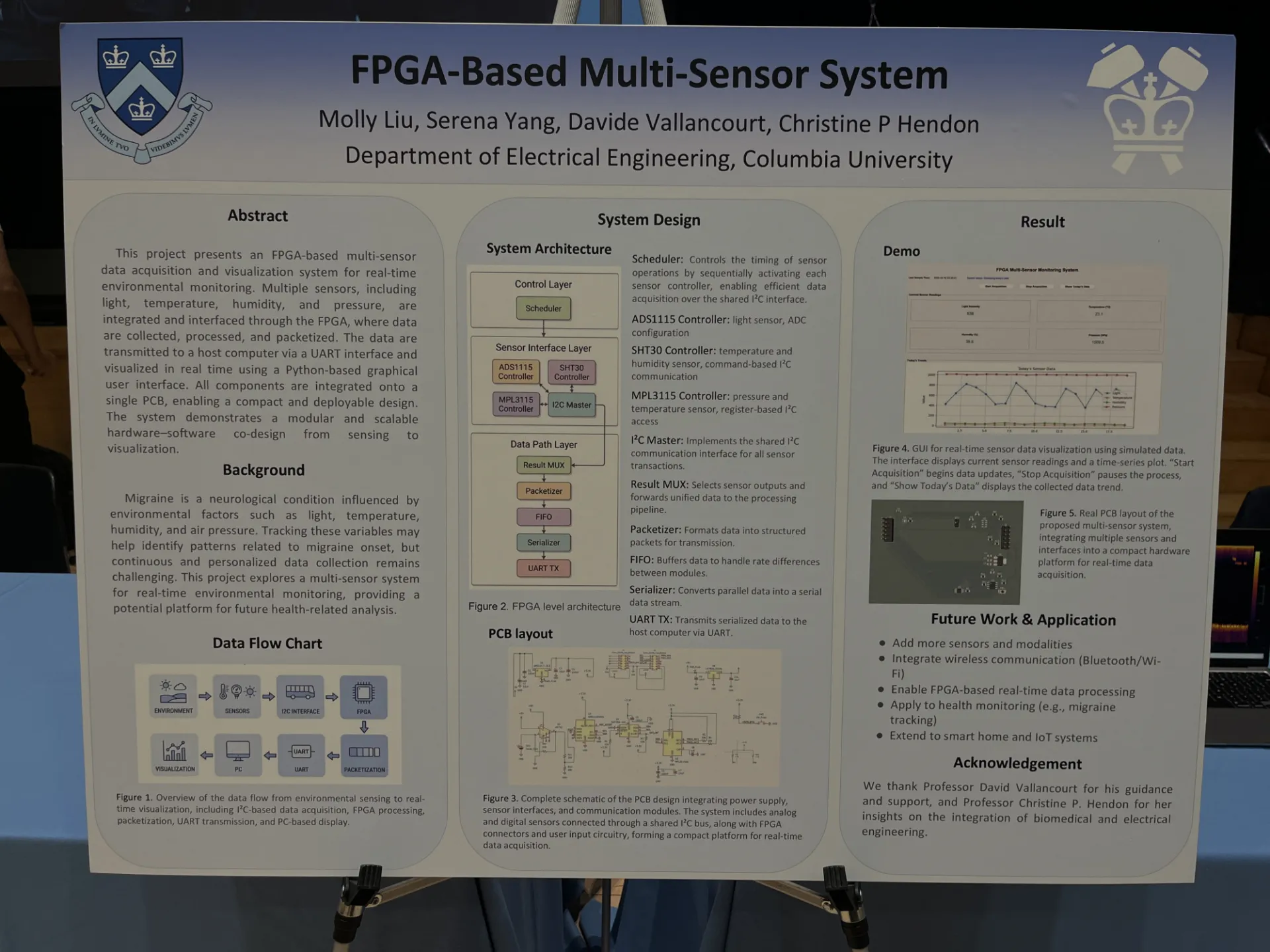
This FPGA-based multi-sensor system was designed for real-time environmental monitoring, with a potential health-related application: tracking environmental factors associated with migraine onset. The project integrates sensors for light, temperature, humidity, and air pressure through an FPGA, collecting and processing data before transmitting it to a host computer through a UART interface.
The team built the system as a modular hardware-software platform, with a Python-based graphical user interface for real-time visualization. By combining sensor acquisition, packetization, FPGA processing, and display into a single PCB-based system, the project demonstrates how electrical engineering tools can support future research in personalized health monitoring.
Clip-On Live Annotation Capture System
Team: Caitlin O’Dea, Lillian Perriello, Albert Wang, Christopher Moronta, and Sekander Ali
Advisor: Prof. David Vallancourt
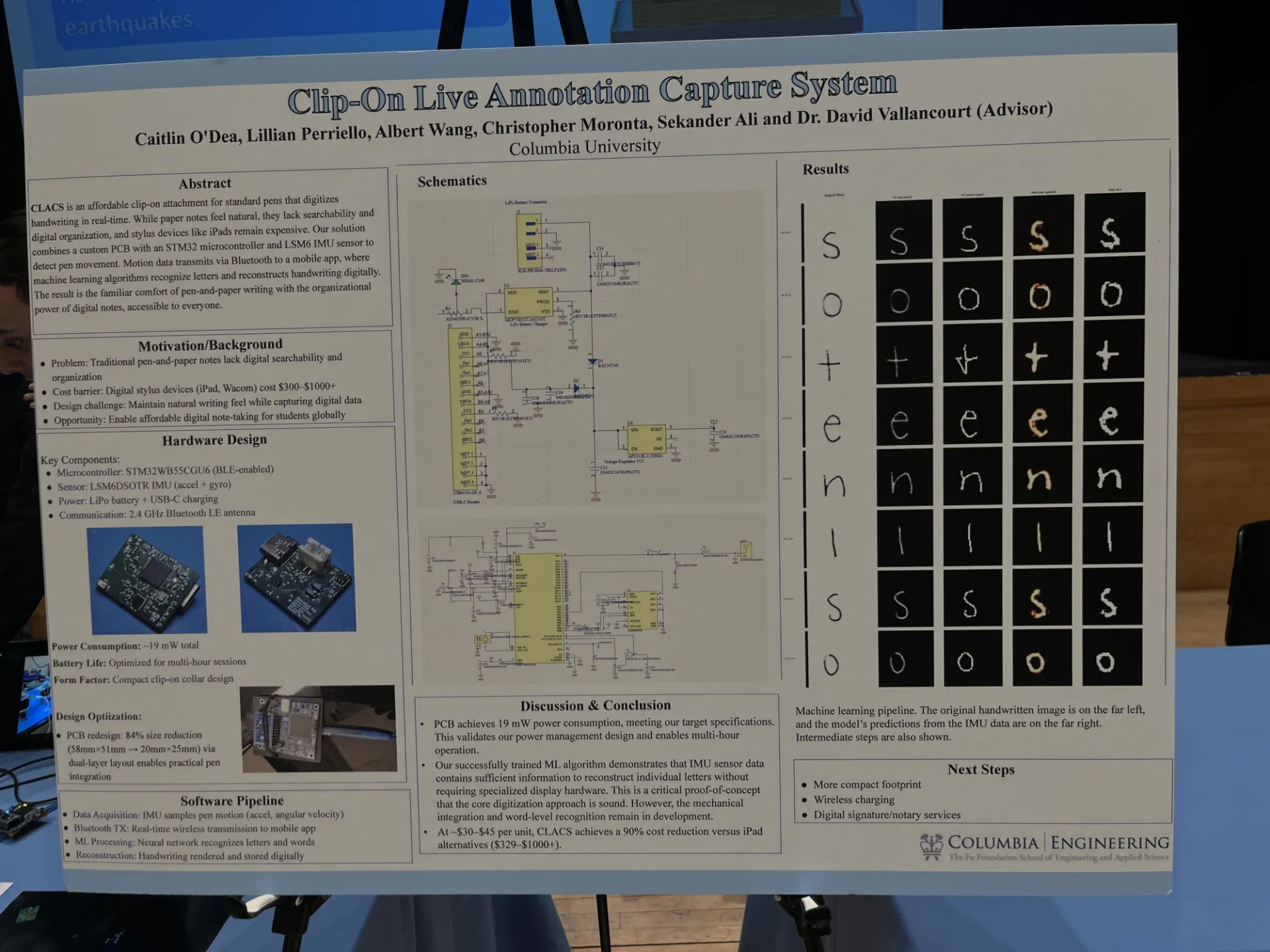
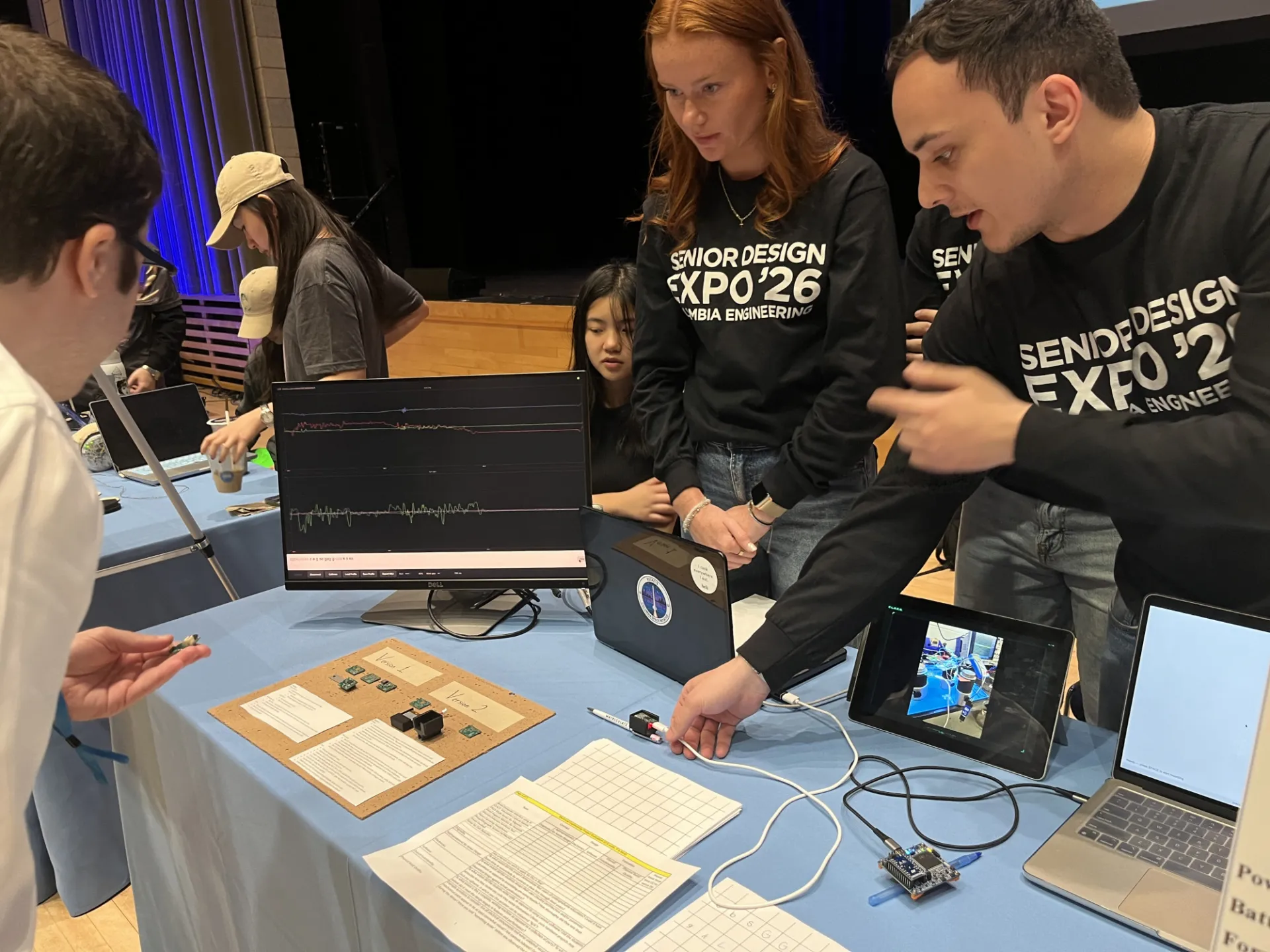
The Clip-On Live Annotation Capture System, or CLACS, reimagines digital note-taking by preserving the familiar feel of pen and paper while adding the organization and searchability of digital notes. The team created a compact clip-on device that attaches to standard pens and uses motion sensing, Bluetooth transmission, and machine learning to reconstruct handwriting digitally.
The system combines a custom PCB with an STM32 microcontroller and an LSM6DSO IMU sensor to detect pen movement. A software pipeline then processes motion data and uses a neural network to recognize letters and words. At an estimated cost of $30 to $45 per unit, the project offers a more affordable alternative to many tablet and stylus systems while maintaining the accessibility of ordinary handwriting.
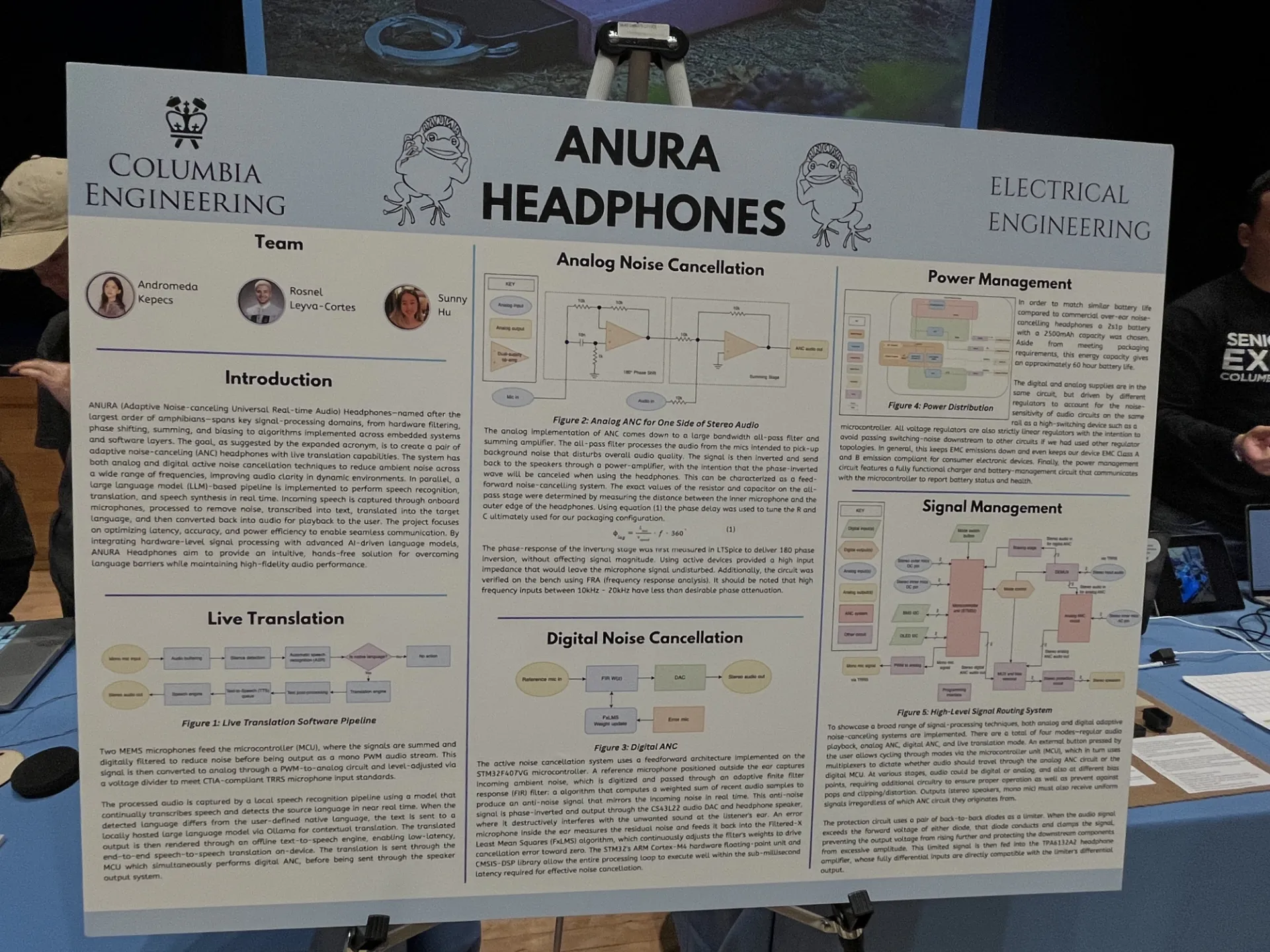
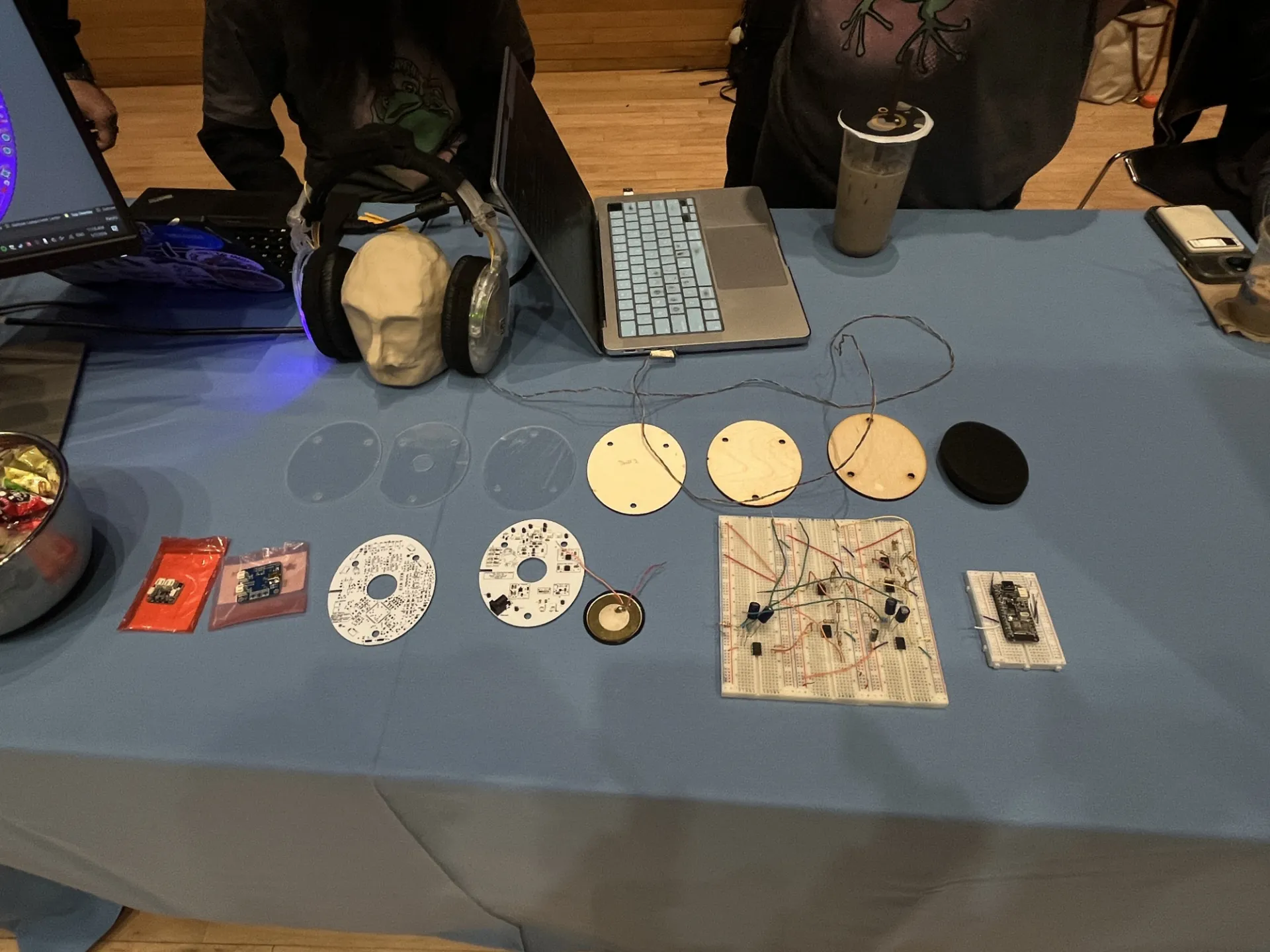
ANURA Headphones
Team: Andromeda Kepecs, Rosnel Leyva-Cortes, and Sunny Hu
Advisor: Prof. David Vallancourt
ANURA, short for Adaptive Noise-canceling Universal Real-time Audio, is a pair of smart headphones designed to combine active noise cancellation with real-time language translation. Named after the order of amphibians, the project takes inspiration from frogs’ signal-processing abilities and applies them to audio filtering, speech recognition, and playback.
The system integrates microphones, active noise cancellation, speech-to-text, translation, and text-to-speech into a single wearable audio platform. Its analog and digital noise-cancellation pipelines are designed to reduce environmental noise while preserving the clarity needed for live translation. The result is a prototype aimed at improving hands-free communication across language barriers while maintaining high-fidelity audio performance.
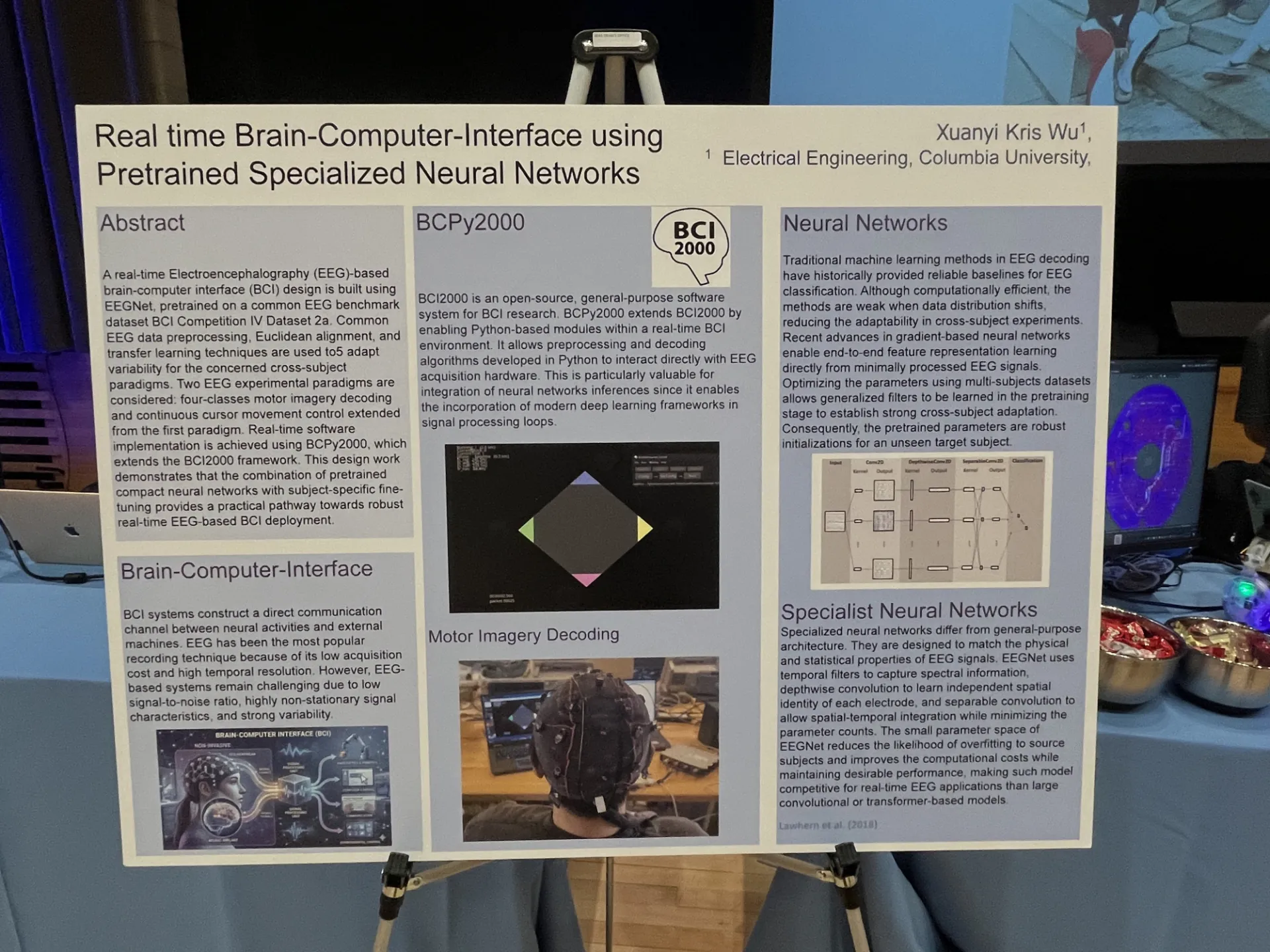
Real-Time Brain-Computer Interface Using Pretrained Specialized Neural Networks
Team: Xuanyi Kris Wu
Advisor: Prof. David Vallancourt
This project explores real-time EEG-based brain-computer interface design using pretrained specialized neural networks. Built with EEGNet and BCPy2000, the system adapts pretrained neural network models to decode EEG signals for BCI applications, including motor imagery decoding and continuous cursor movement control.
The project addresses one of the major challenges in EEG-based systems: variability across users. By combining transfer learning, neural network preprocessing, and real-time software implementation, the system points toward more robust and deployable BCI tools. The work demonstrates how compact, pretrained neural networks can support real-time EEG applications without relying on overly large models.
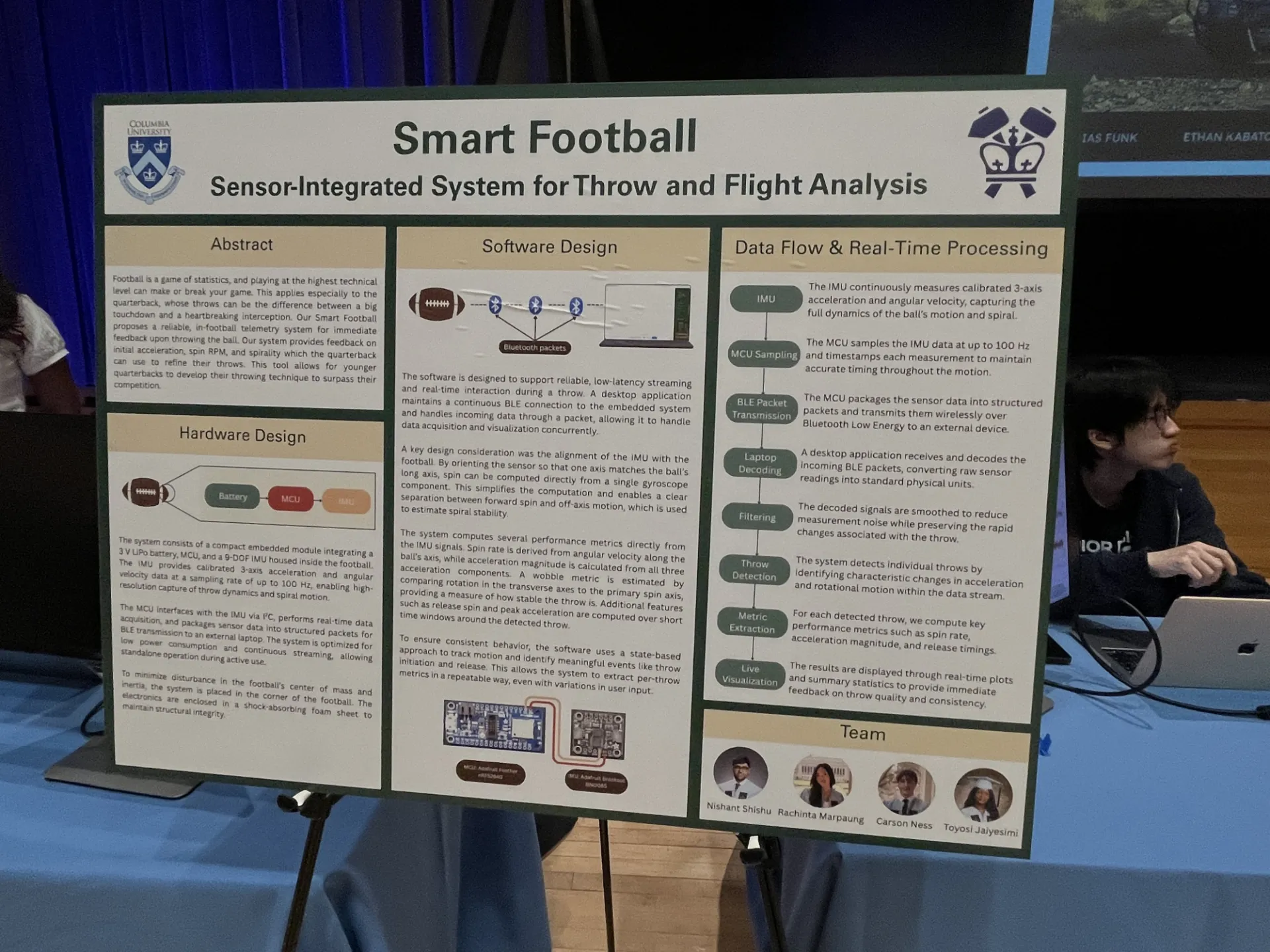
Smart Football: Sensor-Integrated System for Throw and Flight Analysis
Team: Nishant Shishu, Rachinta Marpaung, Carson Ness, and Toyosi Jaiyesimi
Advisor: Prof. David Vallancourt
Smart Football brings real-time sensing and analytics to quarterback training. The team embedded a sensor-integrated system inside a football to measure key throw metrics, including initial acceleration, spin rate, and spiral quality.
The system uses a compact embedded module with a battery, microcontroller, and nine-degree-of-freedom IMU, transmitting data through Bluetooth Low Energy to an external device for analysis. Its software pipeline detects individual throws, filters sensor data, extracts performance metrics, and visualizes results in real time. Designed for younger quarterbacks and training environments, the project turns a familiar sports object into a data-driven coaching tool.
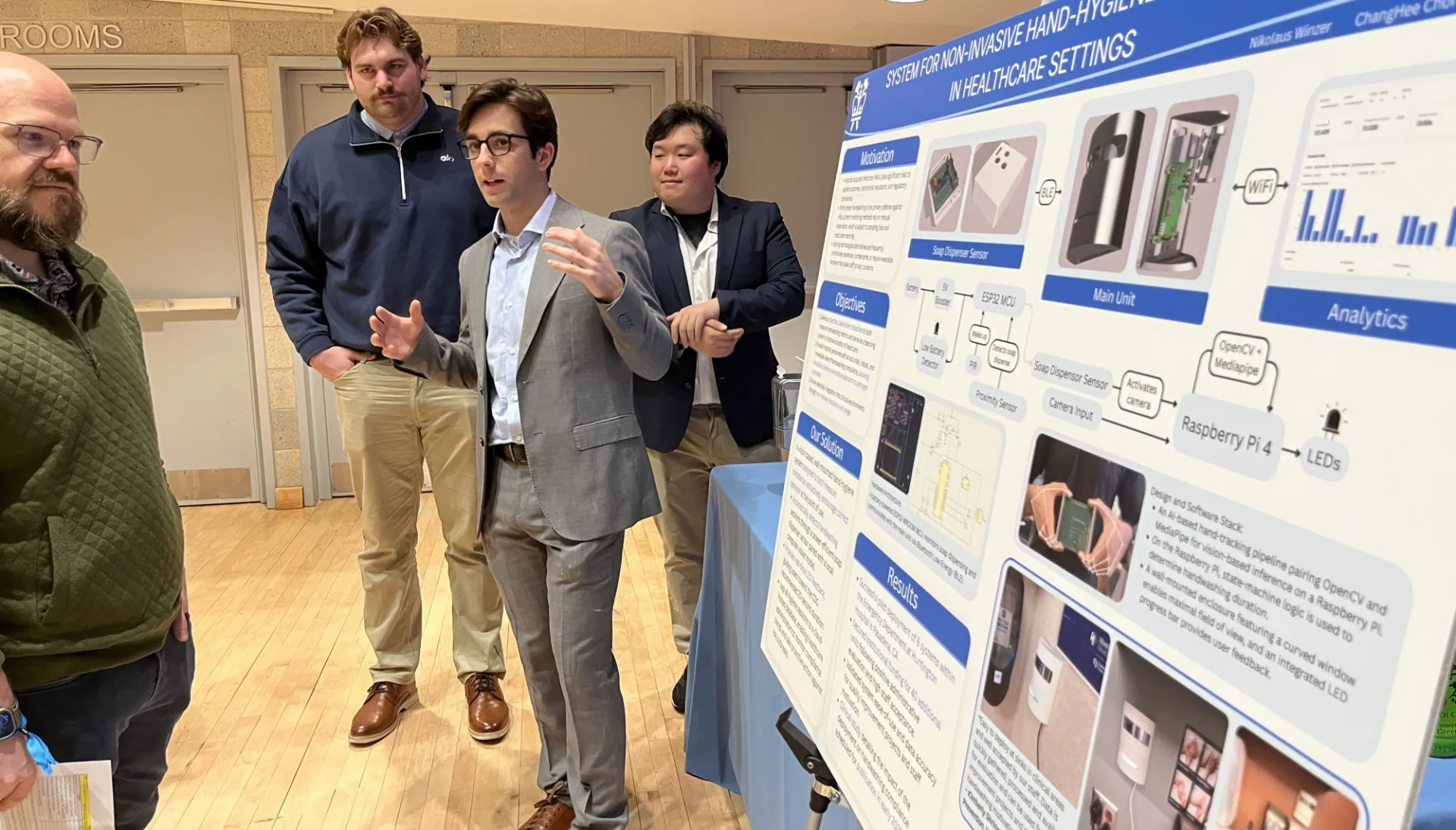
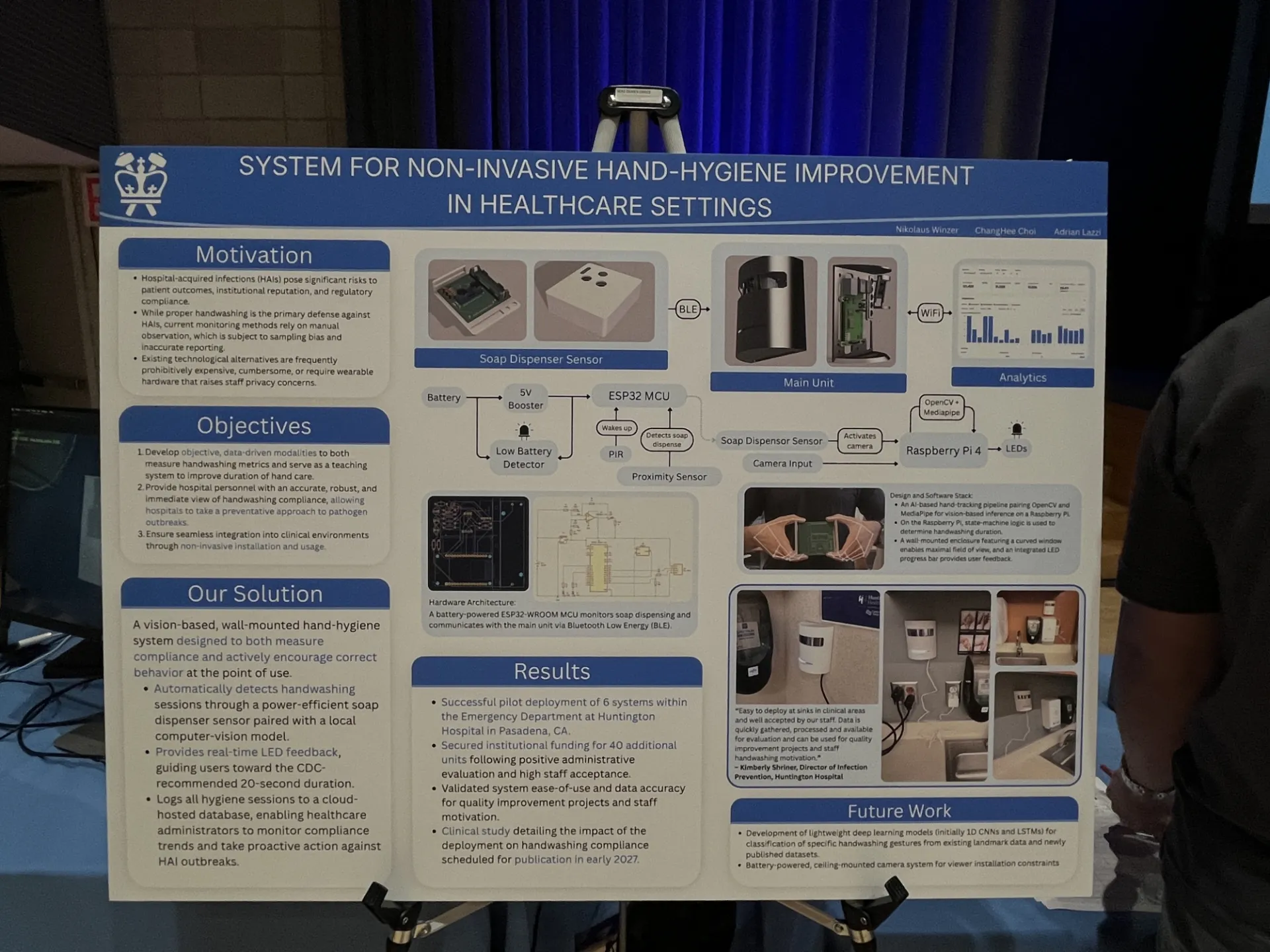
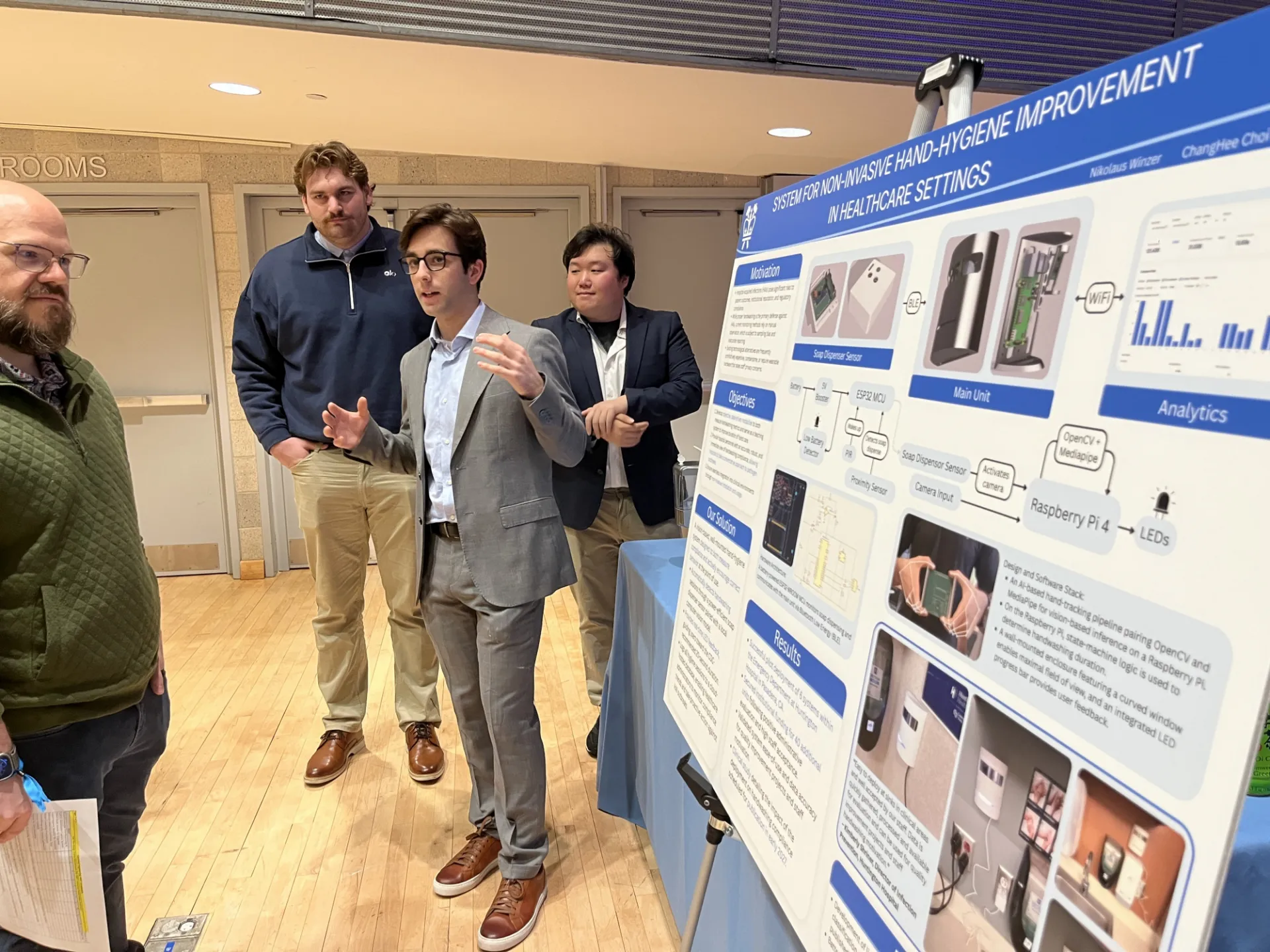
System for Non-Invasive Hand-Hygiene Improvement in Health Care Settings
Team: Nikolaus Winzer, ChangHee Choi, and Adrian Lazzi
Advisor: Prof. David Vallancourt
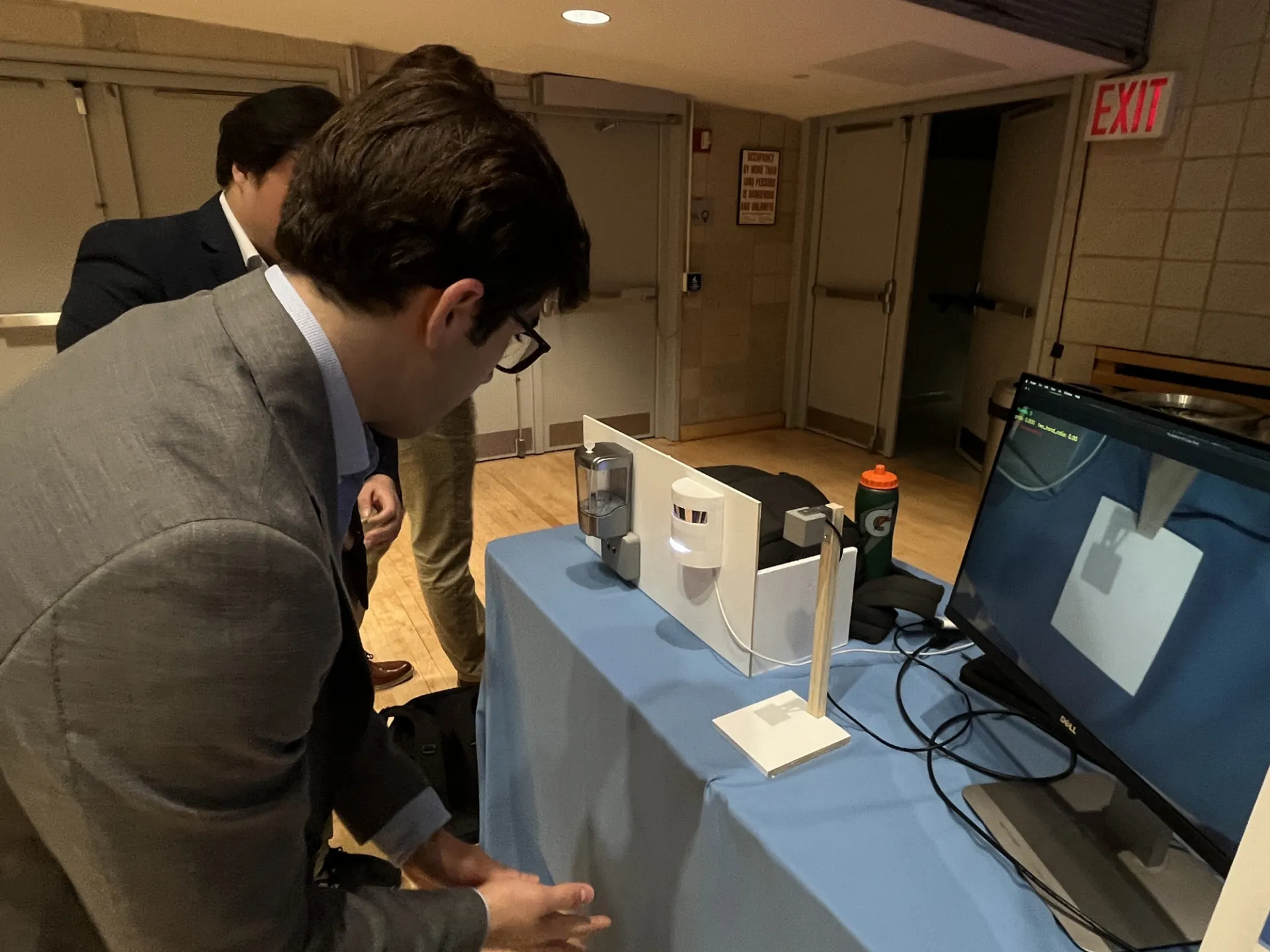
This project addresses a persistent health care challenge: improving hand-hygiene compliance without relying on invasive monitoring systems. The team developed a vision-based, wall-mounted system designed to detect handwashing sessions, provide real-time LED feedback, and log compliance data for health care administrators.
The system combines a soap dispenser sensor, Raspberry Pi, camera input, AI-based hand-tracking, and cloud-based analytics. A pilot deployment of six systems at Huntington Hospital in Pasadena, California, demonstrated the system’s potential for clinical environments, and the team reported institutional funding for additional units. By focusing on non-invasive installation and real-time guidance, the project offers a practical approach to reducing hospital-acquired infections.
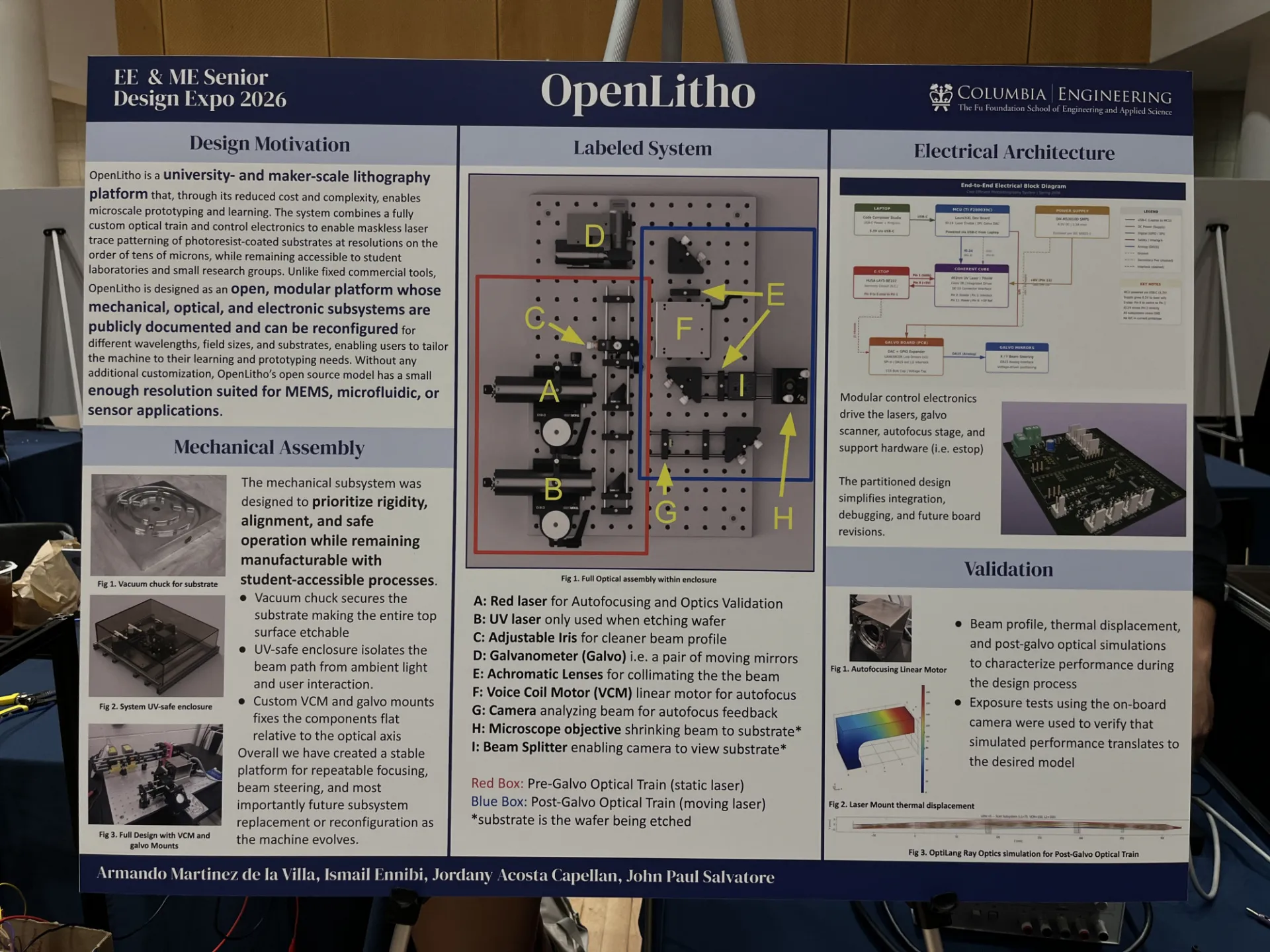
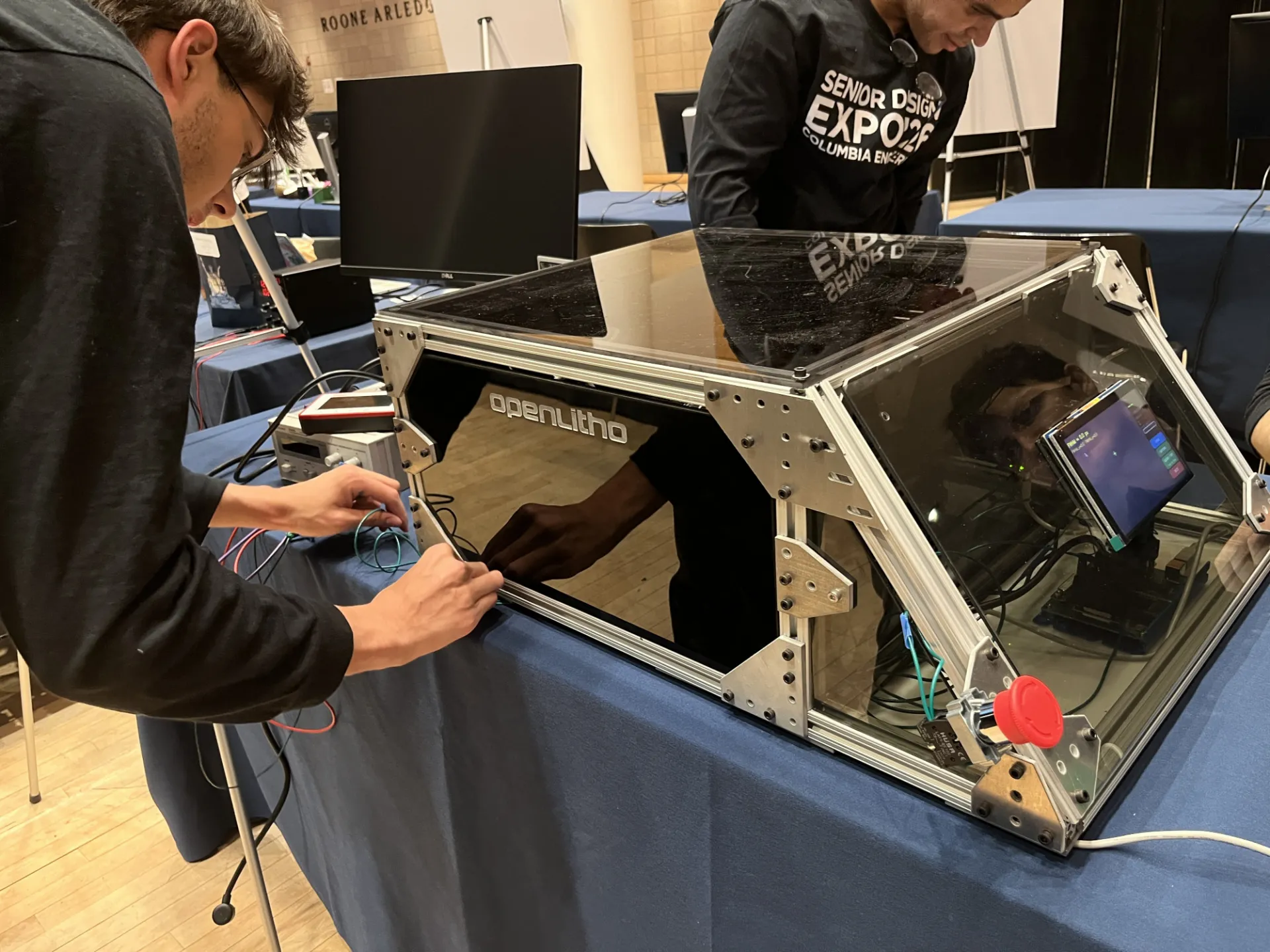
OpenLitho
Team: Armando Martinez de la Villa, Ismail Ennibi, Jordany Acosta Capellan, and John Paul Salvatore (joint by both EE and Mechanical Engineering departments)
OpenLitho is a university- and maker-scale lithography platform designed to make microscale prototyping more accessible. The system combines custom optical, mechanical, and electronic subsystems to support maskless laser trace patterning of photoresist-coated substrates at resolutions on the order of tens of microns.
Unlike fixed commercial tools, OpenLitho is built as an open, modular platform that can be reconfigured for different wavelengths, field sizes, and substrates. Its mechanical assembly prioritizes rigidity, alignment, and safe operation, while its electrical architecture controls lasers, galvo scanners, autofocus, and supporting hardware. With potential applications in MEMS, microfluidics, and sensor prototyping, the project aims to bring advanced fabrication capabilities to student labs and smaller research groups.
Together, the projects showed how senior design can serve as both a technical milestone and a launchpad for broader impact. Whether building tools for health care, education, sports, underwater sensing, or future computing systems, this year’s students demonstrated how electrical engineering can turn complex ideas into working prototypes — and, in many cases, into technologies with clear paths beyond the classroom.
Photo album can be viewed here.