Projects led by Columbia Engineering faculty have received funding through the Genesis Mission, a U.S. Department of Energy initiative that uses artificial intelligence to accelerate scientific research.
Announced in November 2025, the Genesis Mission seeks to build an integrated AI platform connecting supercomputers, AI systems, quantum technologies and advanced scientific instruments. By bringing together the DOE’s 17 national laboratories with universities and industry, the initiative aims to accelerate discoveries in energy, fundamental science and national security and double the productivity and impact of U.S. research and innovation within a decade.
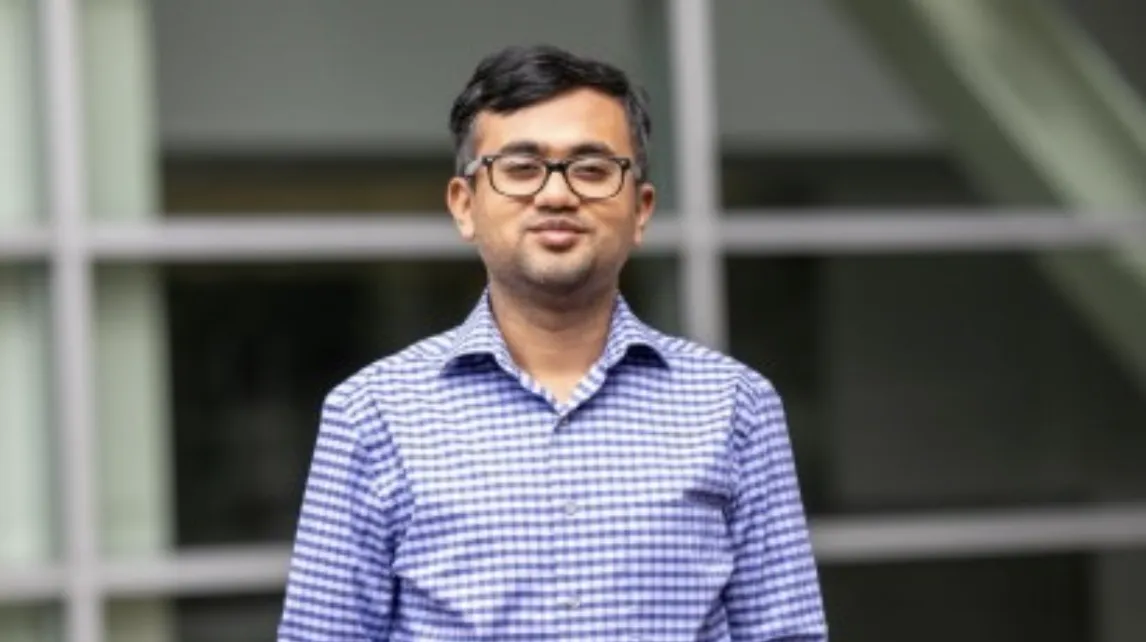
Tanvir Ahmed Khan, assistant professor of electrical engineering at Columbia Engineering, received funding for his project, “Characterizing the Performance of HPC Workloads from Binary Executables,” in collaboration with researchers at Lawrence Livermore National Laboratory, which is leading the project.
Understanding the Demands of High-Performance Computing
The DOE’s national laboratories operate some of the world’s most powerful high-performance computing, or HPC, systems. These machines allow scientists to tackle computationally intensive problems across fields ranging from energy and materials science to artificial intelligence.
But the applications running on these systems can have vastly different computing needs. Understanding how individual workloads use processing, memory and other hardware resources is essential to improving the performance and efficiency of these systems.
“The high-performance needs for these computing applications are extremely diverse, and the goal of this project is to meet these diverse needs by characterizing application executables across a wide range of scenarios using profiling hardware,” said Khan, whose research on efficient data center processing has been adopted by Intel and Arm.
Led by Lawrence Livermore National Laboratory, the project will develop an AI-powered knowledge graph framework to capture and organize information about how HPC applications perform across different computing systems. By providing a clearer picture of what individual scientific workloads require, the researchers aim to help computing systems use their resources more effectively and support faster, more efficient scientific discovery.
Read original story here.